.png)


Newer Musician Board Members Are Carrying Farm Aid Flame Forward

Comments at Festival's Press Event Touched On Unity, Data Centers... and Cannabis?
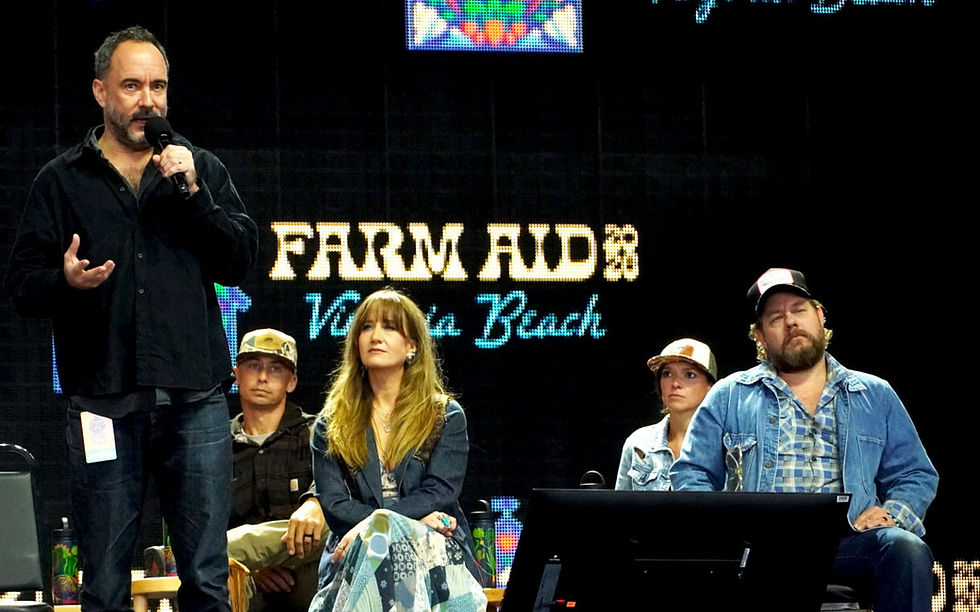
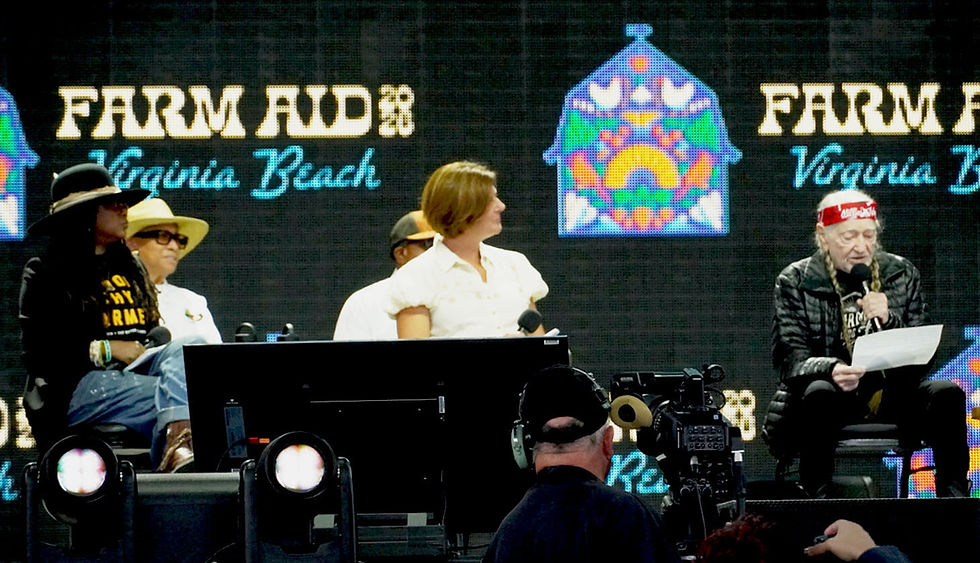
This article is one in a series about the Farm Aid Festival, held in late September in Virginia Beach, Virginia. An article published on Tuesday (September 29) covered the statements made during the annual pre-concert press event by the three stars — Willie Nelson, Neil Young and John Mellencamp — who in 1985 founded the non-profit with the mission to help family farmers and promote a better, healthier, more sustainable food system.
This article follows up with the statements by Dave Matthews, Margo Price and Nathaniel Rateliff, the other musician-members of the Farm Aid Board.
Dave Matthews
Dave Matthews joined the Board in 2001, not long after he bought a farm in the Virginia countryside, starting growing grapes and opened Blenheim Vineyards. Born in South Africa, Matthews had a peripatetic life as a youth before he settled into Charlottesville, Virginia. It was there that he started the Dave Matthews Band, which was inducted into the Rock and Roll Hall of Fame in 2024. Abigail Spannberger, who this year became the first woman governor in Virginia's history, introduced Dave during the evening concert.
Like Neil Young and John Mellencamp, Dave Matthews (who is 59 years old) does not pull punches about his political views:
I want to say from my heart that farmers, small farmers, especially community farmers, are sort of the heart of our community, and they're the providers of good food, and they're also the people that believe in the health of the land. So they serve many purposes, and they are examples to us of many things that are good about us and that are good for the planet.
I feel compelled to say that there are forces, both from our leaders and our political leaders on both sides, and from the wealthy, to divide us, to divide us up, and we have to remember that we have more in common — with the example of farmers — than we have things that separate us.
We are unified by our common humanity, and we need to always remember that there's forces that tell us that the farming community believes this or supports this in politics, or they switch the other side. They try and make us enemies of each other, and it's the most terrible effort because really, what it's doing is trying to steal power away from the small farmers and the family farmers, so they can turn a profit higher up.
It's all about greed that we have to fight. It's about greed of control over our land, over our health, over our food, over our schools. It's all about greed. It's like I heard Neil say once before: If you want to find a solution to the problems, follow the money, and you follow the greed, and we will have solutions. Because I know that the people here that are farming are caring for our land, and they're caring for our communities, and I'm deeply grateful for that. And we have to fight for them because they are the people that will help us save this planet from greed and corruption.

Margo Price
All of the musician Board members came to Farm Aid because of their value systems and concerns for family farmers. For Margo Price, though, the cause is intensely personal. She was born in 1983 as the national farm crisis was deepening, and she was just two years old when her grandfather lost the farm in western Illinois that had been in the family for generations.
She sang about the traumatic impact of this loss in the song Hands of Time on her 2016 debut album Midwest Farmer's Daughter and made her first Farm Aid appearance the same year. She joined the Farm Aid Board in 2021.
Margo loves to garden and was asked during the press event to discuss the therapeutic benefits of gardening. She mentioned that it builds community and that she and neighbors barter products from their gardens — and one item she mentioned drew some chuckles from the audience:
Anytime I feel depressed, going out to the garden is an immediate cure for me. And I think farmer suicide rates are up. Not only that, but people are feeling more and more isolated, more and more disconnected.
Going outside, growing your own food, even if just a small amount, this year I had six different kinds of heirlooms [tomatoes]. I had a lot of peppers. Just put my fall garden in, and I always try to kind of barter with people in my neighborhood. My neighbors have chickens, and so I trade them tomatoes or cannabis or eggs but, you know, you do what you can.
Nathaniel Rateliff

Nathaniel Rateliff in February became the newest musician member of the Farm Aid Board. But he was already very familiar to Festival regulars: His band Nathaniel Rateliff and the Night Sweats became Farm Aid regulars in 2016. This year's concert was the first time he appeared as a solo artist, but he was joined on stage for a few songs by I'm With Her, an all-woman trio that had performed on the Festival stage earlier in the day.
Nathaniel responded to a question about the backlash against tech industry data centers being built in rural areas, often against the wishes of local residents:
I think first we need to organize those people and educate people. In my home state of Missouri, it's actually Montgomery County, Google and Amazon were just awarded 1,900 acres, so that's almost three miles of woodland that right now is absorbing water. That's in an area on the Missouri River that floods every year, so it'll have some huge impacts to the area around there.
But I was texting my mom to see if she knew anything about it because she still lives in Hermann [the small city where Nathaniel grew up], and I don't think she does. And I don't think other people know about what's happening in their communities before it sneaks up.
And so I think that's the biggest thing. It's one of the things why we come here every year is to try to educate ourselves and other communities, and I think that's the best way we can continue to organize and get together.

Comments