.png)


Illinois' Glazik Family Turns Their Organic Grain into Quality Spirits

How Cow Creek Farm and Silver Tree Spirits Have Made Paxton a Farm-to-Glass Hub

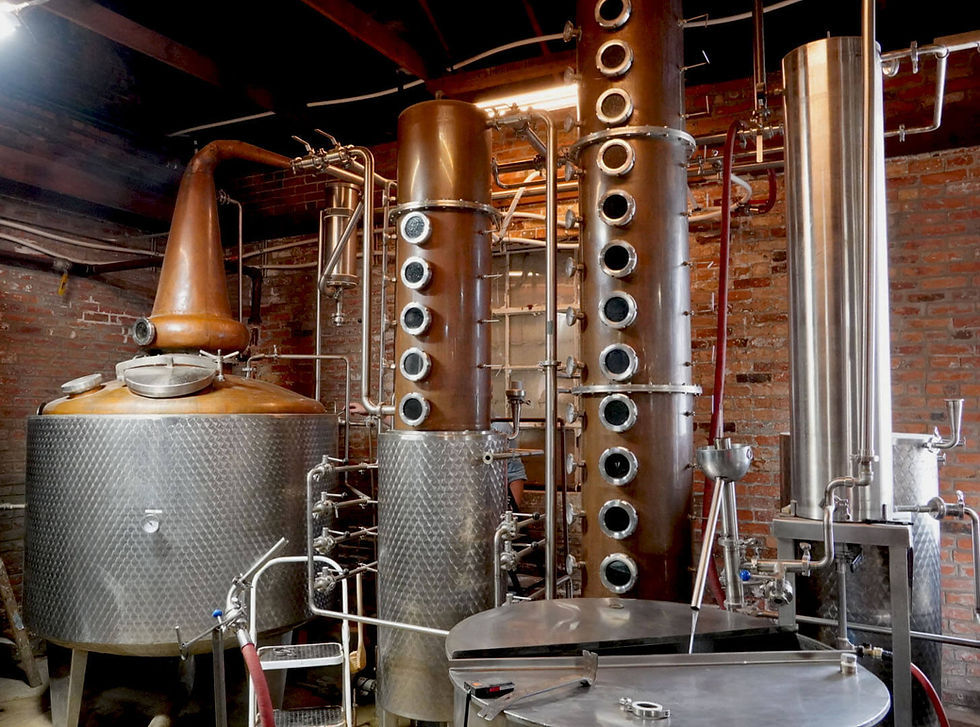
In an era when large-scale commodity farms produce most of the nation's grains, the growing sector of sustainable grain producers is nonetheless still deeply in the minority.
At the same time, farms that distill spirits from their own grains — a practice dubbed "grain to glass" and "seed to spirit" — are few and far between.
That makes the Glazik family's operation in the east-central Illinois town of Paxton quite special. Their Cow Creek Farm emerged early on (20+ years ago) as a regional leader in sustainable and regenerative grain farming. And their desire to add an additional revenue stream to complement the always chancy economics of farming led to the establishment in 2016 of Silver Tree Spirits, producer of well-crafted whiskeys and vodka.
Visiting a farm is the best way to learn about the joys, challenges and beauty of farming. Visiting a distillery is the best way to learn about the craft and chemistry of spirits distilling.
So I gladly accepted an invitation to attend a tour and tasting event in Paxton on July 24, which was presented by the OGRAIN (organic grain) program at University of Wisconsin, Artisan Grain Collaborative, The Land Connection, IDEA Farm Network, Mad Agriculture (a regenerative agriculture organization), and Rodale Institute.
Brothers Will and Dallas Glazik, who run the operations, led the farm and distillery tour. In all, four generations of Glaziks participated in the event: parents Jeff and Rita Glazik, who made the bold decision to grow organic grain at a time when that was exceedingly rare; Rita's nonagenarian father; and Dallas' two-year-old son.
The Glaziks farm their own family's lands and on property owned by others. The first stop on the farm tour was one of the latter.

The group arrived by bus. It was immediately clear that the old saying, that corn should be knee-high by the 4th of July, is an outdated old saw: Near the end of July, these corn stalks towered way over everyone's heads. I asked Will if this meant it has been a good year for corn in east-central Illinois, and he said yes.
Will pointed out a planting of blue corn as he led us through the field. "I really like growing food and knowing this stuff is going to end up in spirits or tortillas or grits. It makes me feel good about it," he said.
We finally arrived at a plot in which Will is experimenting with the indigenous American practice of "three sisters" planting of corn, beans and squash — the three main crops for the native tribes in North America, which provide complementary benefits to each as they grow.
It is challenging, Will said, with problems such as the corn blotting out sunlight for the other plants and the beans and squash not lending themselves to mechanical harvesting. But he continues to try and adapt.

The group was given an invitation — rare for a city kid like me — to walk through the corn rows and even pick off some ripe ears as we passed through.

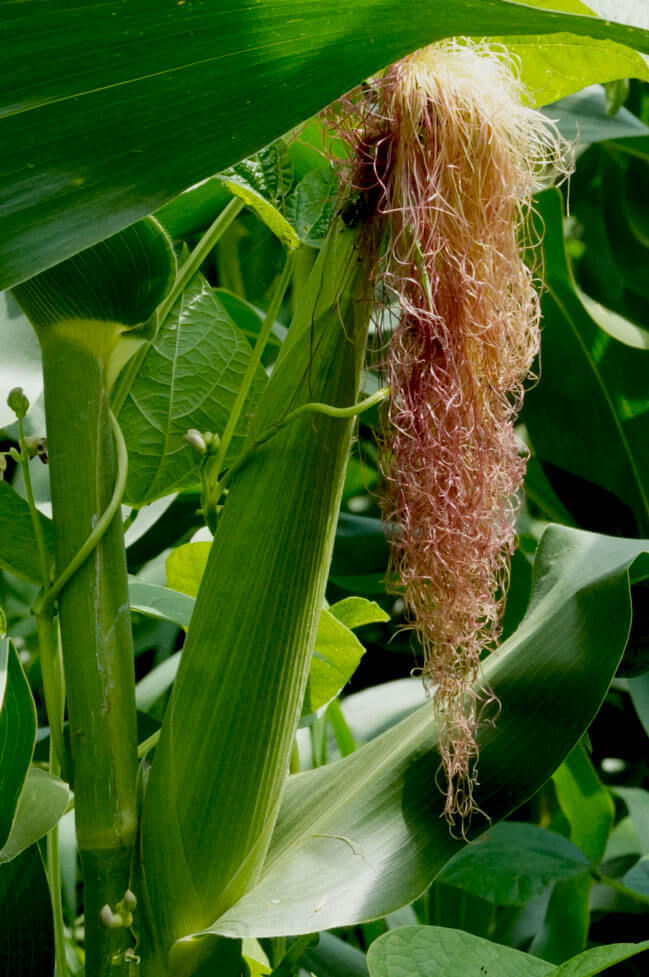

Will led the group to another area of the farm where our eyes were immediately caught by these piles.

Will explained that this is distiller's grain, though it might be more accurate if it were called "distiller's spent grain." The (sad) truth is that most corn grown in the farm state of Illinois is not food grade, but rather goes into cars (as ethanol) or cows (as feed). Ethanol is a distillation process, hence the moniker of distiller's grain applied to this waste product.
The Glaziks get theirs from an ethanol plant in Gibson City, about 18 miles due west of Paxton. While most distiller's grain also ends up as livestock feed, it has proved effective as a soil supplement, which is how the Glaziks are using it.

We then moved on to Dallas Glazik's farm, where the corn is planted along with black beans.

We next enjoyed a demonstration of a 1940s-era grain cleaner that separates out the chaff (oats were the grains used for the demo).


The bus then took us back to The Cadillac event space next to the Silver Tree Distillery in Paxton's little downtown. First up was a panel on Midwest malt.
Malting involves the soaking, germination and drying of grain for use in distilled spirits and other products such as malt vinegar. Barley, the source of most malt used in distilling, used to be grown prolifically in the Midwest, but much of that disappeared during and after the Prohibition era. But there has recently been at least a small scale revival that has also spawned a handful of regional malt houses.

The panel (from left) included John Clarke of Artisan Grain Collaborative, who moderated; Caleb Michalke, founder/co-owner of Sugar Creek Malt in Lebanon, Indiana; Zach Sparks, wheat and barley commercial manager at KWS Seeds in Thorntown, Indiana; Hannah Francis, a Ph.D. student and organic grain outreach specialist at University of Wisconsin Madison; and Bill Welter, founder/CEO of Journeyman Distillery, which produces spirits using organic grain in Three Oaks, Michigan and Valparaiso, Indiana.

The lunch provided included delicious tacos (with tortillas made with Cow Creek Farm corn) from the popular Maize restaurant in nearby Champaign...

... and goat milk gelato produced locally by Goat & Pail.

Dallas Glazik led the distillery tour. Like many small farmers, the Glaziks decided about a decade ago that they needed to utilize their grain crops to produce additional revenue streams. Dallas said their first idea was a brewery, but Riggs Beer Company in Urbana was really taking off at the time, so they switched tracks: "So we decided to go to distilling. If it doesn’t take off, hard spirits don’t spoil. So we could still have a pallet of vodka and have vodka for the rest of our lives."
Dallas related that his brother Will went to a brewer-baker-distiller conference held by Artisan Grain Collaborative in Alton, Illinois (near St. Louis), where he got inspiration to pursue spirits making. Dallas later said that Silver Tree is one of four grain-to-glass farming/distilling operations in Illinois, the others being Whiskey Acres in DeKalb, Kennay Farms Distilling in Rochelle, and Old Monroe Distilling in Columbia.
The distillery produces Silver Tree label Ringneck rye whiskey (I bought a bottle of this to take home), Cow Creek Bloody Butcher red corn bourbon, Heartland wheat whiskey, and Down East wheat vodka.

We visited the warehouse, known as a rickhouse, where the spirits age for years in barrels laid on their sides. Dallas shared a charming story about how he and his wife have a newborn and he has set aside a barrel of whiskey to age for 21 years — when the child has reached legal drinking age.

With the distillery producing about a barrel of spirits a day, the rickhouse is not at capacity. Silver Tree shares some of the space with Chicago's Judson & Moore distillery, which uses Cow Creek grain in its products.

Silver Tree also produces vodka for Perennial Spirits of Shorewood, Minnesota, so named because their product is made with Kernza, one of the few perennial grains.
Kernza (a trademarked variety) was developed by The Land Institute based in Kansas.
Unlike annual crops that grow from seeds planted each year, Kernza sets down deep roots, and its advocates believe it can be key to improved soil health and regenerative agriculture. It is still in limited production, though, and Dallas Glazik said the Perennial Vodka production makes Silver Tree the single largest processor of Kernza.

The tour ended with a relaxed tasting around the bar built by the Glaziks in a wing of the distillery building, a former auto showroom.
The day was a delightful and educational diversion. I recommend it highly if they put it on again next year.


Comments